Category: Stories

  • When pain becomes your normal – By Bonnie Charles

    For the past few months, my ankles have been causing me more pain than usual. Like many people living with haemophilia, pain is something I have learned to live with. I adapt where I can, push through the difficult days, and tell myself that things could always be worse. What I had started to realise, though, was that the pain medication I’d been prescribed just wasn’t cutting it anymore. The pain had begun to affect my day-to-day life more than I wanted to admit. It was always there, sitting in the back of my mind. Even on special days, when I should have been enjoying myself and making memories, there was always that underlying awareness of my ankles and how much they were hurting. It had started to put a dampener on moments that should have been purely happy.

    Recently, I had a routine appointment with my consultant. Nothing out of the ordinary – just one of those regular check-ins that have been part of my life for as long as I can remember. But when they asked me how I was getting on, I found myself stopping and really thinking about the answer. It made me realise just how much I had been holding in. Somewhere along the way, pain had become my normal. I had become so used to arthritic ankles due to years of bleeds and adjusting my life around them that I stopped recognising how much they were affecting me. I wasn’t really talking about it; I was simply getting on with things, as I’ve always done. Living with haemophilia teaches you resilience. You learn to adapt, to carry on and to make the best of difficult situations. But sometimes resilience can come with a downside. Sometimes it means we minimise what we’re going through or convince ourselves that because we are coping, we don’t need to talk about it.

    Sitting in that appointment, answering what should have been a straightforward question, I realised how much I had normalised the pain and how rarely I had allowed myself to acknowledge the emotional side of living with it. The frustration, the tiredness and the quiet adjustments that become part of everyday life. What struck me most, though, was how amazing my haematology team were. As soon as I explained how things had been, they listened. They reassured me that I didn’t need to just put up with life like this and immediately prescribed new medication, with a follow-up appointment arranged to see how I was getting on. More importantly, they reminded me that I should always talk to them. I didn’t have to struggle in silence or wait until things became unbearable. Help and support were there; I just needed to be honest about how I was feeling.

    It also made me wonder how many others in the bleeding disorders community do exactly the same. How many of us quietly carry things because we’ve become so accustomed to doing so? My ankles haven’t suddenly improved, and I don’t have all the answers, but that conversation reminded me of something important: just because something has become normal doesn’t mean it isn’t difficult. And talking about how we’re really feeling isn’t complaining, it’s being honest. It also made me think about the people around us. If you know someone with haemophilia, please understand that we don’t always talk about our aches and pains. For many of us, they’ve become part of everyday life. We adapt, we carry on, and sometimes we forget ourselves just how much we’re dealing with. That doesn’t mean we don’t struggle, and it doesn’t mean we don’t need support. We may not always want advice or answers, but knowing that someone is there to listen when we are ready to talk can mean more than you realise. Sometimes, what we need most isn’t for someone to fix things – it’s simply for someone to understand, to be patient, and to be there when we need them.

    Perhaps the biggest lesson I’ve taken from this is that we don’t have to carry it all alone. Whether it’s our haematology team, family, friends or those closest to us, there are people who care and who want to help. And perhaps it’s okay to admit that sometimes, we’re carrying more than we think.

  • Service of Recognition, Remembrance and Reflection at St Paul’s Cathedral

    On 19th May 2026, members of the Local Families with Bleeding Disorders (LFWBD) community attended the deeply moving Service of Recognition, Remembrance and Reflection at St Paul’s Cathedral in London.

    Hundreds of people gathered together to remember and honour all those affected by the infected blood tragedy, a tragedy that has had a devastating and lasting impact on so many within the bleeding disorders community and their families.

    The service was thoughtful, emotional and incredibly powerful. There were moments of sadness and reflection, but also moments of compassion and recognition. Hearing Michael Ball sing within the magnificent setting of St Paul’s Cathedral added to the emotion and significance of the occasion.

    Another particularly moving moment came when the cathedral fell completely silent as thousands of campaign-coloured petals were released from the Whispering Gallery above, gently falling through the cathedral in memory of all those we have lost over the many decades since this tragedy first unfolded. It was a beautiful and heartbreaking tribute that will stay with many of us for a very long time.

    We were also each given the name of someone who wanted to be remembered and aske to read out their names in unison and ask that they be remembered.  Such a touching action to be part of.

    A number of political figures attended the service, including Prime Minister Keir Starmer, Theresa May, and Diana Johnson, alongside many others who have supported the fight for truth, justice and recognition for those affected, as well as many members of the Inquiry team including Sir Brian Langstaff who gave yet another poignant speech about just how unimaginable and unforgiveable this tragedy is and has been for so long.

    A special mention must go to Clive Smith, Chair of the Memorial Committee, who did a truly outstanding job in helping shape such a sensitive and inclusive event. The care, thoughtfulness and compassion shown throughout the service were evident in every detail.

    Our thoughts remain with everyone affected, both within our own community and across the wider bleeding disorders community.

  • New Haemcast Episode –Real Conversations from our  Community

    We’re delighted to share the latest episode of Haemcast, created in collaboration with Haemnet and some of our wonderful LFWBD families.

    This second episode, titled “Sticky blood, teddies and teens,” features parents Hannah, Mark and Jackie, who speak openly and honestly about how they talk to their children about their bleeding disorder. From explaining where it comes from, to helping children understand what it means for their daily lives and why treatment is so important, the conversation is both insightful and incredibly relatable.

    These are the kinds of discussions that don’t always happen easily. Knowing what to say, when to say it, and how much to share can feel overwhelming for many families. What makes this episode so powerful is the honesty and reassurance it offers — hearing from other parents who truly understand can make all the difference.

    At Local Families with Bleeding Disorders (LFWBD), creating spaces where families can share experiences and support one another is at the heart of what we do. This podcast is another brilliant example of how those conversations can reach even more people, helping families feel less alone and more confident in navigating everyday life.

    A huge thank you to Haemnet and to Hannah, Mark and Jackie for sharing their experiences so openly.

    You can listen to the episode here: https://loom.ly/_Pr-GBk

    Or search “Haemcast” on your favourite podcast platform.

    We hope you enjoy listening as much as we did.

  • A Big Thank You to Our Committee and Trustees

    As Chair of Local Families with Bleeding Disorders (LFWBD), I want to say a huge thank you to our incredible committee members and trustees who gave up their Sunday to attend our AGM and annual strategy day.

    It was so valuable to all be together in person — something we rarely get the chance to do outside of our events. Having that dedicated time and space to talk, reflect and plan really helps us to come together as a team and make sure we have a clear path forwards for the year ahead.

    We spent time looking back on the past year and celebrating everything we’ve achieved together. It really has been a record breaking year.  Three grants secured, a poetry book created and shared widely, a children’s illustrated book about our superhero’s adventures, the launch of our first podcast in collaboration with Haemnet, numerous family blogs published also with Haemnet, attendance at the parliament event for rare disease day and the HNA conference for the first time ever and all whilst growing our membership and delivering a wide range of well attended events.  It really has been  year we can be proud.

    Just as importantly, we looked ahead. With lots of great ideas and discussion, we’ve put together an exciting events calendar for the year ahead, ensuring we continue to support our families in meaningful and engaging ways.

    None of this would be possible without the time, dedication and care that our trustees and committee members give throughout the year. Everything they do is on a voluntary basis, and their commitment is what keeps LFWBD thriving.

    If you’re interested in getting involved and joining our team, we’d love to hear from you. Together, we can continue to build something really special for our community.

  • Connecting with Our Community at the HNA Conference

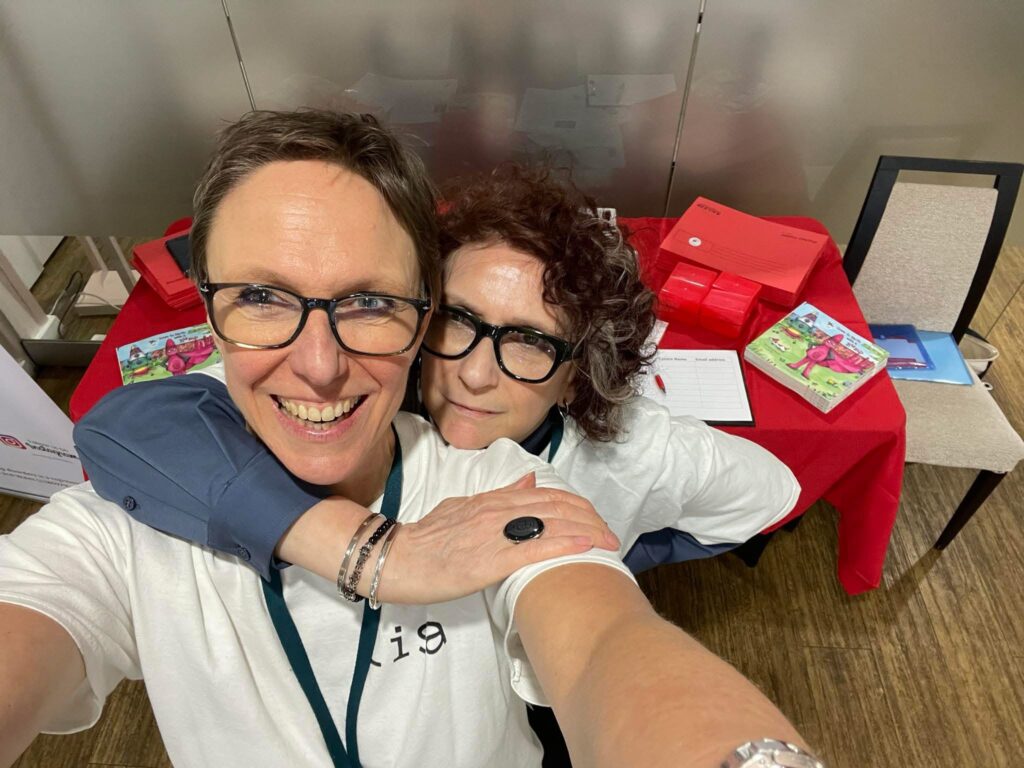
    Sandra, one of our trustees, and I had the pleasure of attending the Haemophilia Nurses Association (HNA) Conference at Aston University and Conference Centre in Birmingham. It was a fantastic opportunity to meet and connect with haemophilia nurses from across the country — the true backbone of our community.

    These dedicated professionals support families every day, often forming some of the most important and trusted relationships in the lives of those living with bleeding disorders. It was wonderful to have the chance to speak with so many of them, share the work we are doing at Local Families with Bleeding Disorders (LFWBD), and spread the word about the support network we have created for families.

    We were also delighted to share copies of our newly launched book, Down to Earth with a Bump, which sparked lots of interest and great conversations. Alongside this, we shared links to our new poetry book, another project created by our members to express the lived experiences of families affected by bleeding disorders.

    We provided information packs for nurses to take back to their centres, including our parent-written factsheets on travel, starting school, and hospital stays — practical resources designed to support families through some of the moments that can feel most challenging.

    It was also great to meet representatives from a number of pharmaceutical companies, many of whom were very interested in the work we are doing to bring families together, provide peer support, and create opportunities for connection beyond clinical care.

    A big thank you to Marie Eales, Chair of the HNA, for inviting us and making us feel so welcome. It was a hugely positive and productive day, and we hope to be back again next year.

  • Bleeding and Belonging – Finding Our Voices Through Poetry

    At Local Families with Bleeding Disorders (LFWBD) we are always looking for new ways to support our members and help them feel connected. While our community often comes together through social events, last year we had the opportunity to explore something different through our poetry project, Bleeding and Belonging.

    Seven members of our LFWBD community took part in a series of online workshops led by the wonderful poetry facilitator Dawn Gorman. The project was made possible thanks to funding secured by Dr Rich Gorman from Brighton Medical School, through the University of Brighton’s Centre for Arts and Wellbeing. Over six weeks, we met online to write poems around central themes connected to living with a bleeding disorder. Between sessions, participants worked with Dawn to refine and develop their poems, helping each of us shape our thoughts and emotions into something meaningful and authentic.

    All the participants live with their own bleeding disorder and most care for a child with one. The workshops provided a safe and supportive space to explore feelings that can sometimes be difficult to express. Poetry offered a powerful and creative way to share experiences, reflect on the challenges and joys of family life, and connect with others who truly understand.

    The impact of this project was recently highlighted in the Haemcast podcast, produced with Haemnet, where we spoke about the importance of creating spaces where families can share their stories and feel heard.  You can listen to the podcast here https://loom.ly/d6YUipg

    We are incredibly proud of everyone who took part. Their voices, honesty and creativity have created something truly special.

    You can read the digital poetry collection Bleeding and Belonging here: https://issuu.com/b-s-m-s/docs/bleeding_and_belonging?fr=xKAE9_zU1NQ

  • Shining a Light on Partners

    Reflections from Our Latest Podcast

    As Chair of Local Families with Bleeding Disorders (LFWBD), I’m always
    learning more about the different ways bleeding disorders impact not
    just individuals, but entire families.

    We recently recorded a podcast with Haemnet exploring the role,
    experience, and importance of partners who support someone living with
    a bleeding disorder. It was a powerful and thought-provoking
    conversation that really stayed with me.

    What stood out was how deeply partners are affected emotionally,
    practically, and often quietly. They play a huge role in supporting
    their loved ones, and yet they’re rarely the focus of support
    themselves. They bring a unique perspective and experience, one that
    often involves juggling care and advocating for someone they love,
    while trying to process their own worries and fears.

    This podcast made it clear: we need to do more to support partners.
    While our events and community work are often focused on families and
    children, there’s a space here for something more tailored; a safe,
    supportive place just for partners to share, reflect, and connect.

    We’d love to hear your ideas. What kind of support would make a
    difference? A group meet-up? A dedicated workshop? An online chat?
    More podcast episodes featuring partners’ voices?

    If you’re a partner, or know someone who is, and have thoughts or
    suggestions please get in touch. We’re listening.

    This podcast was just the start of the conversation, and we’re
    committed to continuing it. Because support should reach everyone –
    not just the person with the diagnosis.

  • Trustees’ Week –Celebrating the Team Behind LFWBD

    As Chair of Local Families with Bleeding Disorders (LFWBD), I’m proud to mark Trustees’ Week by celebrating the incredible work of our trustee team.

    Trustees’ Week is about recognising the dedication, commitment, and collaboration that go into ensuring a charity not only survives, but thrives. Behind every fun family day, every picnic, every day out or Christmas lights tour, there’s a small but hardworking team making sure everything we do is safe, sustainable, and effective.  This includes not only our Trustees, but very much our committee members too.

    Being a trustee isn’t just about helping to organise events — although that’s a big part of what makes LFWBD so special. It’s also about making sure we comply with important financial and legal responsibilities, and working together to shape the strategic direction of the charity. It takes shared passion, a mix of experience, and a lot of behind-the-scenes effort.

    Trustees come to the role for different reasons, often shaped by personal experiences or the experience they have to offer that will help make a difference in building a stronger charity. What we share is a belief in the value of community, connection, and making a difference to families living with bleeding disorders.

    I’d like to take this opportunity to thank Sarah and Sandra, my fellow trustees, for everything they do. Your time, energy, knowledge and care have helped shape LFWBD into the supportive, trusted charity it is today.

    Together, we’ve built something meaningful — a place where families can find not only support, but also friendship. And that’s something to be incredibly proud of.

    Happy Trustees’ Week to all those who give their time to lead with heart.

  • Finding Our Voice Through Poetry: A Creative Journey with Local Families with Bleeding Disorders

    As Chair of Local Families with Bleeding Disorders, I’m thrilled to share the powerful experience we recently had through a unique poetry course. This initiative brought together individuals living with bleeding disorders to explore their thoughts, feelings, and experiences through the power of creative writing.

    This project was largely thanks to Dr. Rich Gorman, Senior Research Fellow at Brighton Medical School, who successfully secured funding for this project. Rich is a passionate advocate for using creative writing to give voice to lived experiences, and we are deeply grateful for his support.

    The course was led by Dawn Gorman (no relation to Rich!), an award-winning poet, arts practitioner, and journalist. Dawn skillfully guided us through the art of poetry, teaching techniques that helped us unlock deeply personal and emotional stories.

    Under Dawn’s expert mentorship, we created some truly moving and powerful poems. The sessions were not only creative but deeply therapeutic. At times, we confronted challenging and painful memories, but the safe and supportive environment helped us navigate those emotions together.

    This course has been a journey of connection, courage, and creativity. It was an honour to work with such a wonderful group of ladies, each bringing their own voice and strength to the process.

    We hope to publish our poetry later this year and share our journey through an episode of the Haemnet podcast.

    This has been an unforgettable and empowering experience that we shall treasure.

  • Celebrating Mark Salmen – A True LFWBD Hero

    As Chair of Local Families with Bleeding Disorders (LFWBD), I want to take a moment to celebrate one of our longest-standing members – Mark Salmen. Mark, along with his wife and two sons, has been with us since the charity began six years ago. Their journey has included major challenges, from an unexpected diagnosis to navigating needle phobia – and through it all, they have shown extraordinary strength and resilience.

    We’ve been proud to support them during the toughest times, and in return, they have become a huge inspiration to our community. Most recently, Mark took on the London to Brighton Bike Ride and raised over £1,000 for LFWBD.

    Mark, we think you’re amazing. Without people like you, we couldn’t run the events that bring our families together. Thank you for your dedication, generosity, and spirit. We are so lucky to have you in our LFWBD family. Well done!